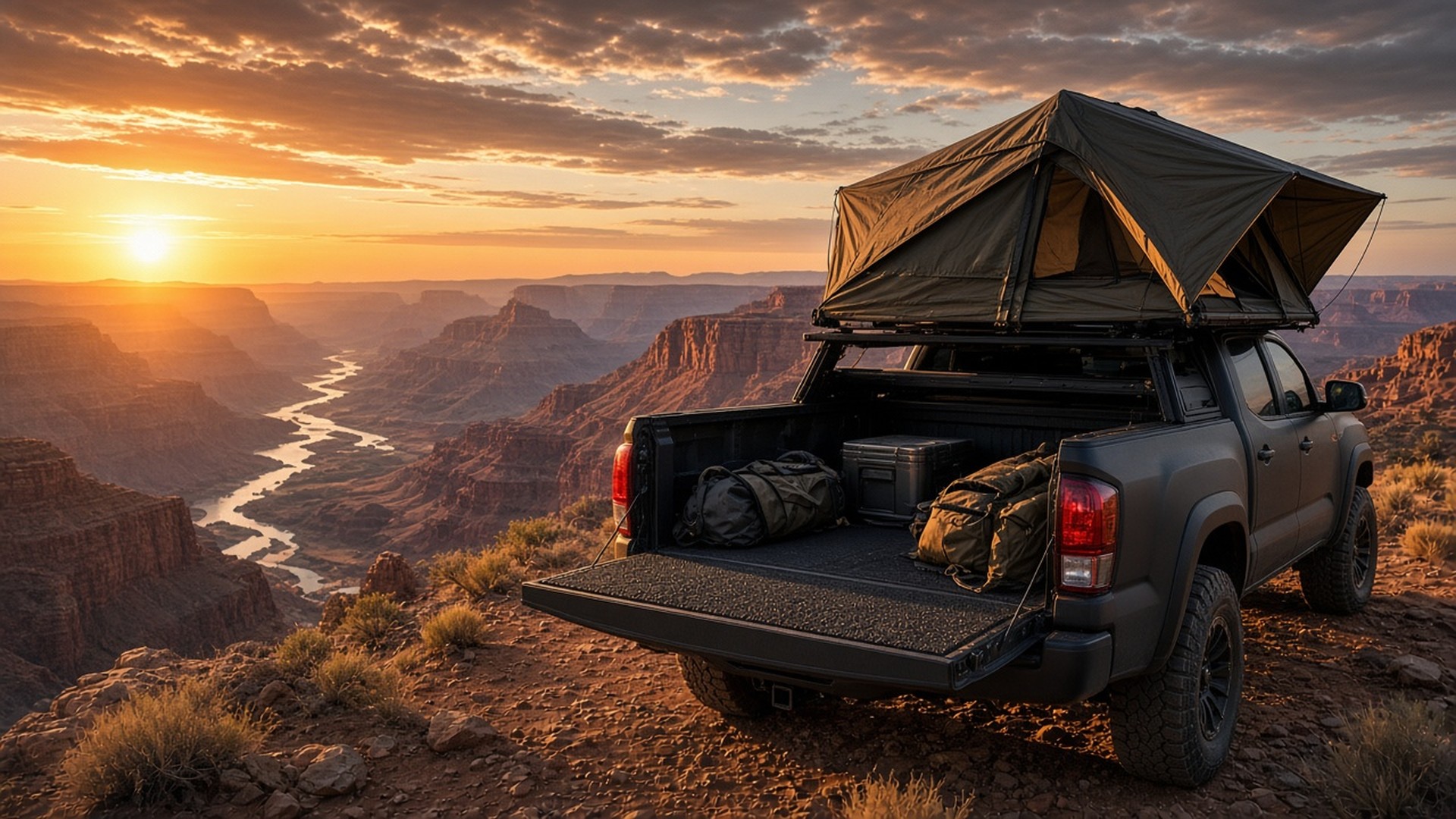
A spray in bedliner is one of the few upgrades that suits an overland truck bed from the first trip to the hundredth. It is also one of the easiest to get wrong. Two trucks can leave a shop with the same black, pebbled finish, and one will still look right after years of recovery boards, fuel cans and wet coolers while the other peels at the edges after a single wet season. The difference is rarely the brand name on the invoice. It is the prep, the product, the way the hardware is handled and what the shop does about sunlight.
This guide is written for overlanders who are about to book a bed coating. It explains what a spray in bedliner is, how it compares with a drop-in liner, what the data sheet for a real polyurea liner says, and the questions worth asking before anyone touches your truck with a spray gun.
What a spray in bedliner is, and how it differs from a drop-in
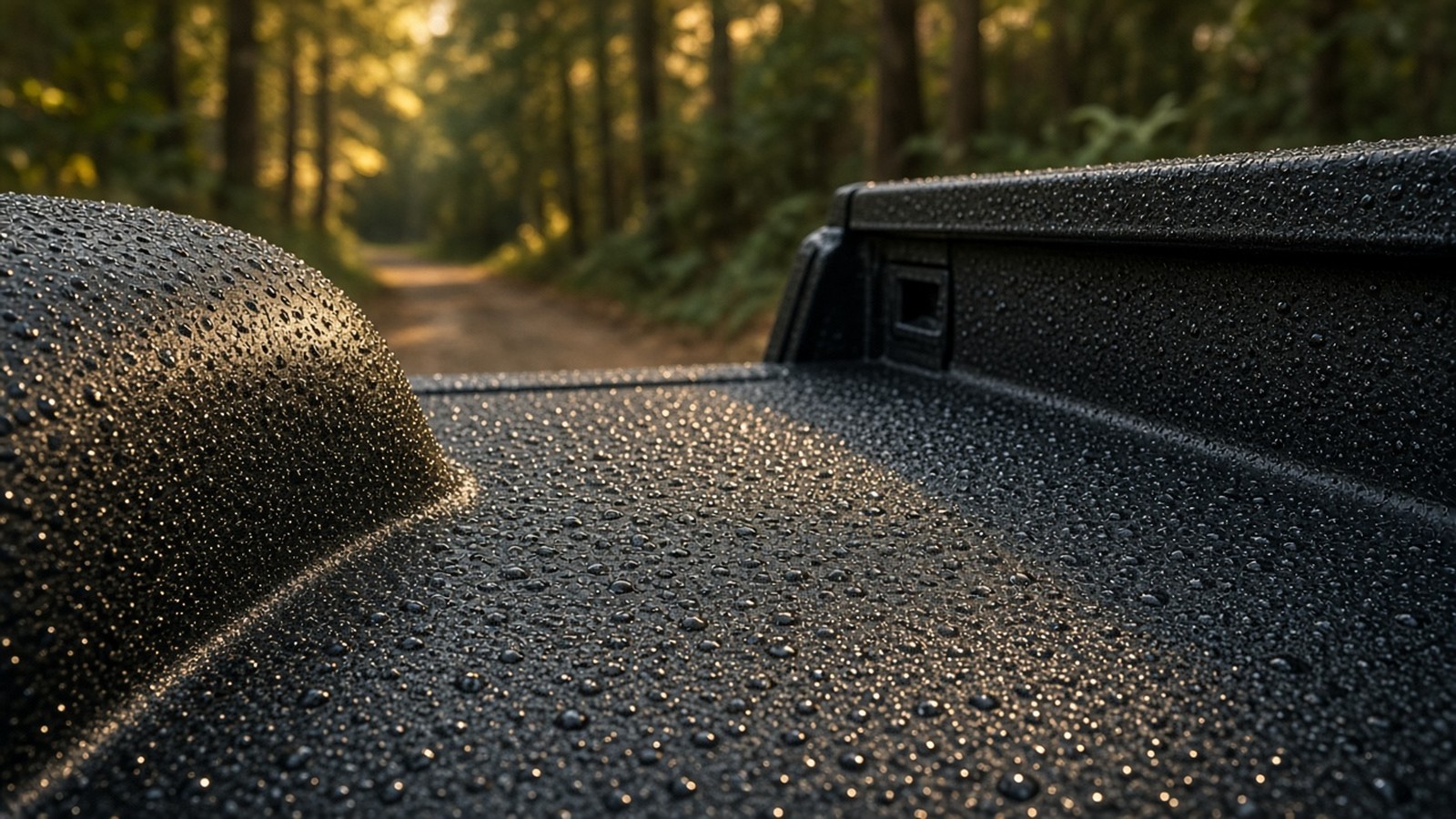
Bedliners fall into two broad groups. Drop-in liners are rigid plastic shells formed to fit a specific truck. They go in with limited preparation and can be removed for cleaning. A spray in bedliner is a liquid coating that is sprayed onto the prepared bed and cures in place. Wikipedia’s overview of bedliners notes that spray-in liners need specific preparation to bond correctly and that how well the coating adheres determines how long it lasts.
The same overview points out that spray-in liners come in many formulations: polyurea or polyurethane, aromatic or aliphatic, high or low pressure, and hybrids. It also notes that texture can be smooth for easy cleaning or rough for grip, and that thicker coatings change the shape and size of the bed somewhat. For an overland build that is a practical detail. If you plan to bolt in a bed rack, slide a fridge on a tray or fit drawers tightly, tell the shop before they coat, not after.
What a real polyurea liner data sheet tells you
Marketing pages are vague. Data sheets are specific. The ArmorThane ArmorLiner data sheet describes a two-component, 1 to 1 by volume, 100 percent solids, fast-set polyurea liner system for metal, concrete, fiberglass and wood. A few lines are worth understanding as a customer:
- Fast set. Pot life is listed as 2 to 4 seconds at 150 degrees Fahrenheit, with tack-free time of 10 to 30 seconds at 150 mils thick. This is why the material is sprayed through heated plural component equipment rather than brushed or rolled from a can.
- Toughness figures. Typical properties listed include about 55 Shore D hardness, tensile strength around 3,000 psi, elongation around 200 percent and tear strength around 400 pli. The sheet notes that spray equipment and parameters affect the results, so they are approximate.
- Temperature range. Service temperature is listed from minus 20 to 250 degrees Fahrenheit, which covers a truck bed in a desert noon or a high-altitude cold snap.
- Prep and testing. The sheet says coating performance and adhesion are directly proportional to surface preparation and recommends an adhesion test before starting a project.
Those numbers belong to one product. A different product will have different figures, which is why you should ask the shop which liner they use and ask to see its data sheet.
Prep decides whether the liner stays on
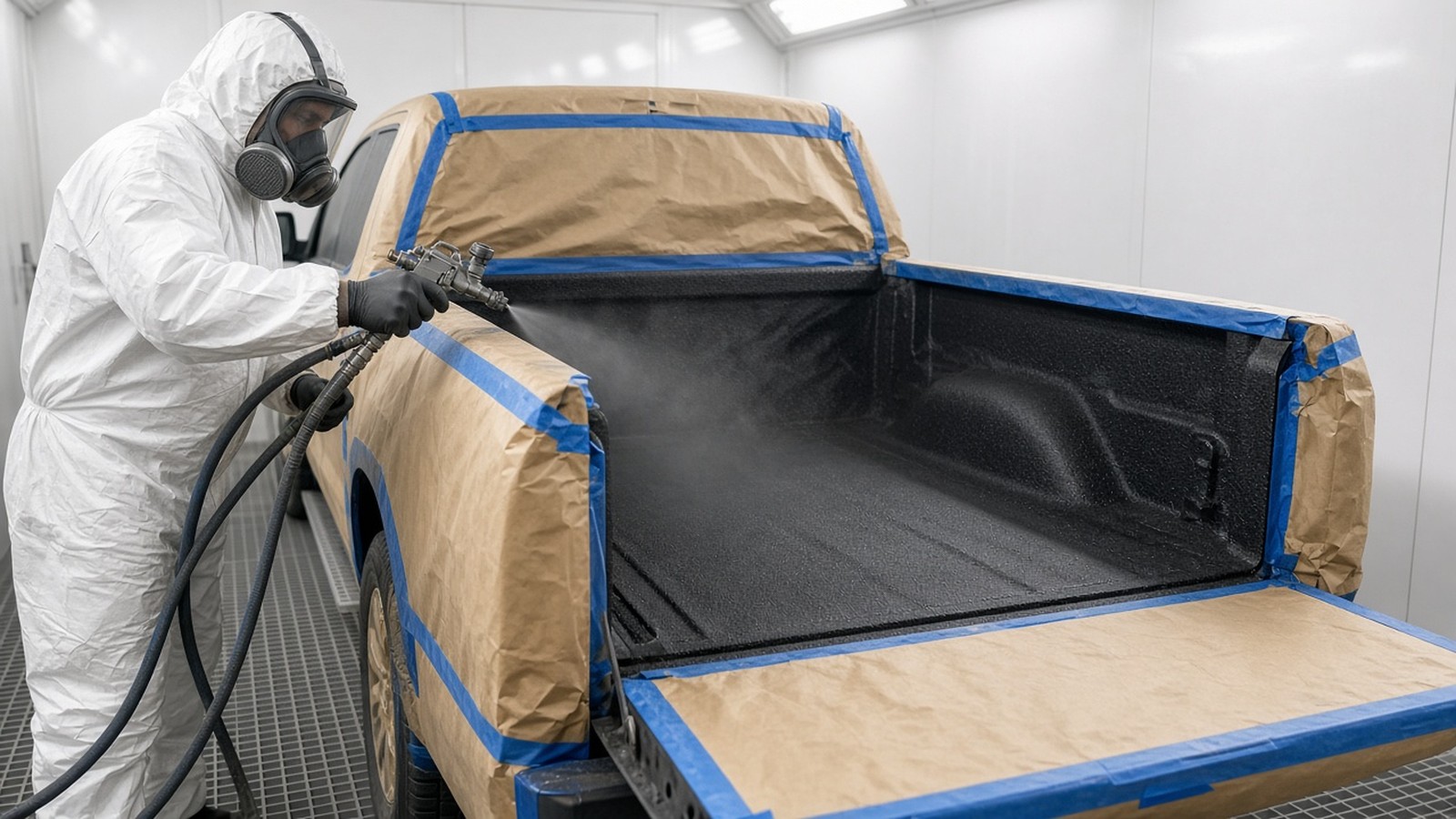
Every credible source agrees on this. The ArmorLiner data sheet says that most coating failures trace back to poor surface preparation and that surfaces must be free of dust, dirt, oil, grease, rust and corrosion. Wikipedia describes sanding the bed to give the coating something to grip. For an overland truck, which may have spent years with wet gear, road salt and mud in the bed, prep matters even more.
Before you book, ask:
- How will the existing bed finish be prepared? Scuffing, sanding or abrading, and how are rust spots and dents handled?
- Is a primer used, and which one does the product maker require for bare metal or paint?
- Will an adhesion test be done, as the data sheet recommends?
- How are bed rails, the tailgate, hinges, stake pockets and drain holes masked, so the coating does not lock moving parts?
Sunlight: the overlander’s quiet problem
Overland rigs live outdoors. The ArmorLiner data sheet is honest about one limitation: because it is an aromatic polyurea, it will tend to yellow or darken after exposure to UV light, and it can be topcoated with ArmorThane UV Topcoat or UV ColorCoat for a color-fast glossy finish. Wikipedia makes the same distinction between aromatic and aliphatic systems. Aliphatic materials hold color better in sunlight and can be sprayed in a wider range of colors.
If your bed is black and mostly covered by a canopy or tonneau, an aromatic liner may be all you need. If you want a color match, a tan or a grey that stays that way on a sun-baked rig, ask about an aliphatic option such as TrueColor, which ArmorThane describes as a 1 to 1 fast-set aliphatic polyurea with excellent color and gloss retention, or ask about a UV topcoat over the liner. Ask the shop to put the plan in writing.
Design the bed around your gear
Overland beds are working spaces: recovery boards, jerry cans, a cooler or fridge, a roof-top tent platform and the straps to hold them. A coating changes surface friction and thickness, so think about the layout while the bed is bare.
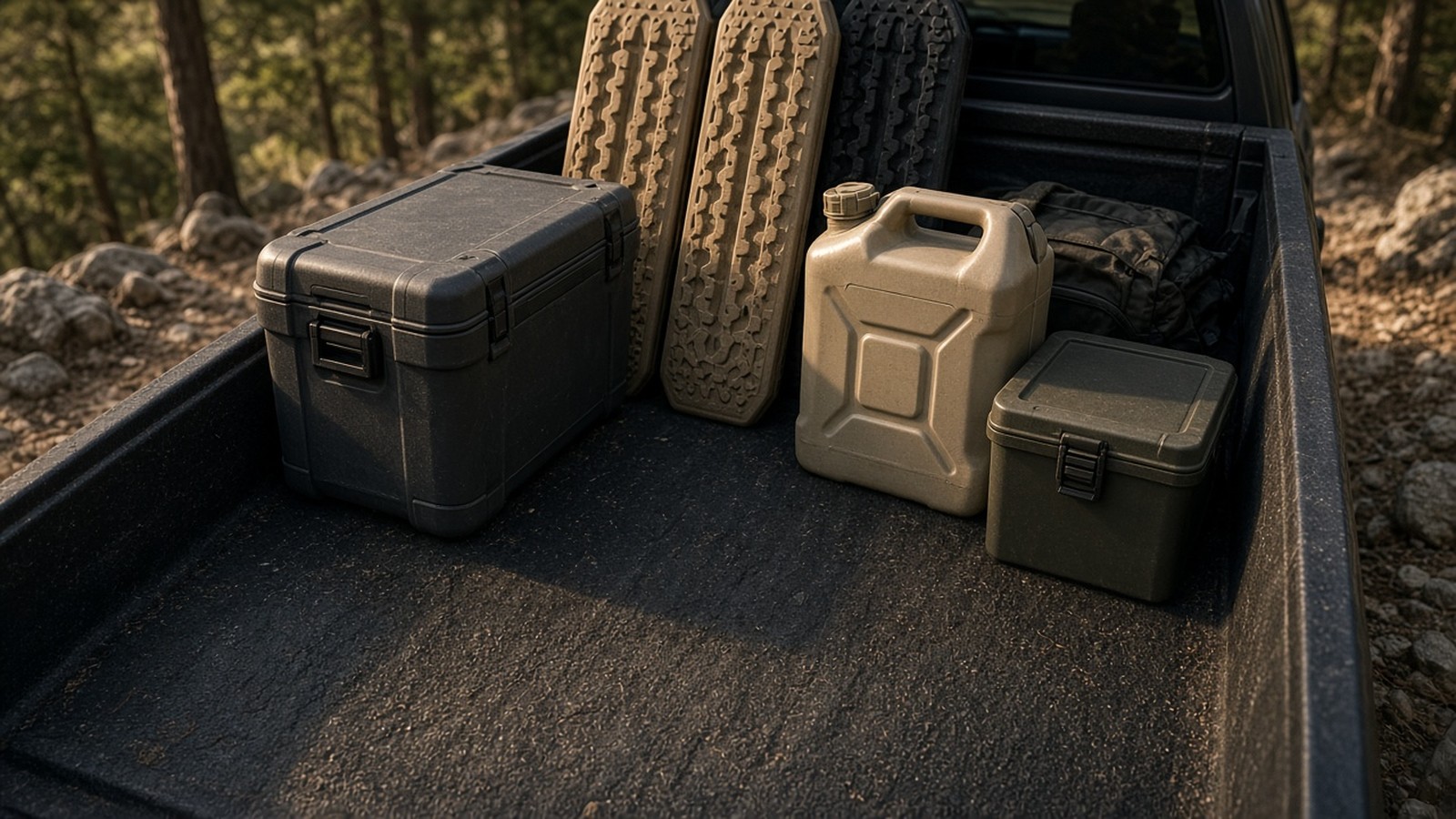
- Tie-downs and rack mounts. Decide whether racks, bars and anchors go in before or after coating, and have the shop mask any threaded holes.
- Texture. A rougher texture grips cargo. A smoother texture lets drawers slide and hoses off cleanly. Choose based on how you use the bed.
- Tight-fit parts. If you run a bed cover, a slide or a rack with a close fit, bring it to the shop so thickness does not create a surprise.
- Wheel wells and bed sides. Make sure coverage runs where gear and boots rub, not only on the floor.
Spray in bedliner questions to ask the shop
- Which product are you using, and can I see its data sheet? A good shop will answer without hesitation.
- Is it polyurea or polyurethane, aromatic or aliphatic? That decides color stability and some performance traits.
- What equipment do you spray with? Fast-set polyureas such as ArmorLiner are sprayed with heated plural component equipment.
- What is the prep plan? See the list above.
- What is the UV plan? Topcoat, aliphatic or accept some yellowing on a black bed.
- When can I load the truck? Return-to-service time depends on the product and conditions, so ask for the data sheet number for your product.
- What does the warranty cover, in writing? Ask what voids it, such as pressure washing, hot loads or a poor prep job.
Spray in bedliner vs other overland protection
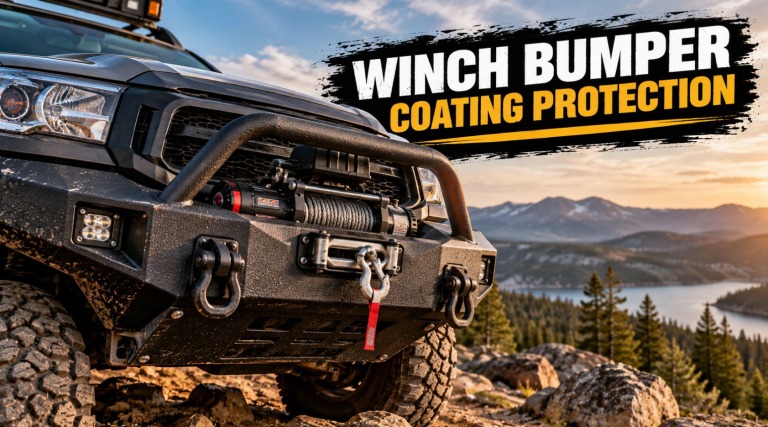
A bed coating is one layer of protection. The same polyurea family is also used on skid plates, bumpers and trailer floors. If you are planning a full build, these posts pair well with this one: skid plate coatings overlanding builds actually need, coating winch bumpers for off-road durability, and building an overland trailer. For a broader overview of why polyurea suits overlanding, see why polyurea is the ultimate overlanding coating.
Frequently asked questions
Is a spray in bedliner better than a drop-in liner for overlanding?
It depends on how you use the bed. A spray in bedliner bonds to the bed, runs up the wheel wells and sides and leaves no loose shell to rattle. A drop-in is removable and needs less prep, but it is a separate plastic shell. Some builders prefer the coating because there is nothing to shift on rough roads.
Will a spray in bedliner change my truck bed dimensions?
Yes, a little. Thicker coatings alter the shape and size of the bed somewhat, according to Wikipedia’s overview. If you have a tight-fitting cover, rack or drawer system, tell the applicator.
Does a spray in bedliner fade in the sun?
Some do. Aromatic polyureas such as ArmorLiner tend to yellow or darken with UV exposure, and a UV topcoat or an aliphatic system helps hold color. Black beds hide the change better than light colors.
Can I do a spray in bedliner myself?
Fast-set polyurea is sprayed with heated plural component equipment and trained applicators. Roll-on kits exist, but they are a different product type with different performance. For polyurea, use a trained applicator.
How long should I wait before loading the bed?
Follow the product maker’s guidance and your installer’s instructions. Return-to-service times vary by product, thickness and temperature.
Next step
If you are weighing a professionally sprayed polyurea bed, find an ArmorThane dealer or applicator near you. Ask about ArmorLiner and TrueColor for the bed, and ask which of ArmorSeal 100 AL, SureGrip and ArmorFlex UV, if any, suits the rest of your build, such as a roof, platform or trailer. Bring your truck, your hardware list and the questions from this guide.