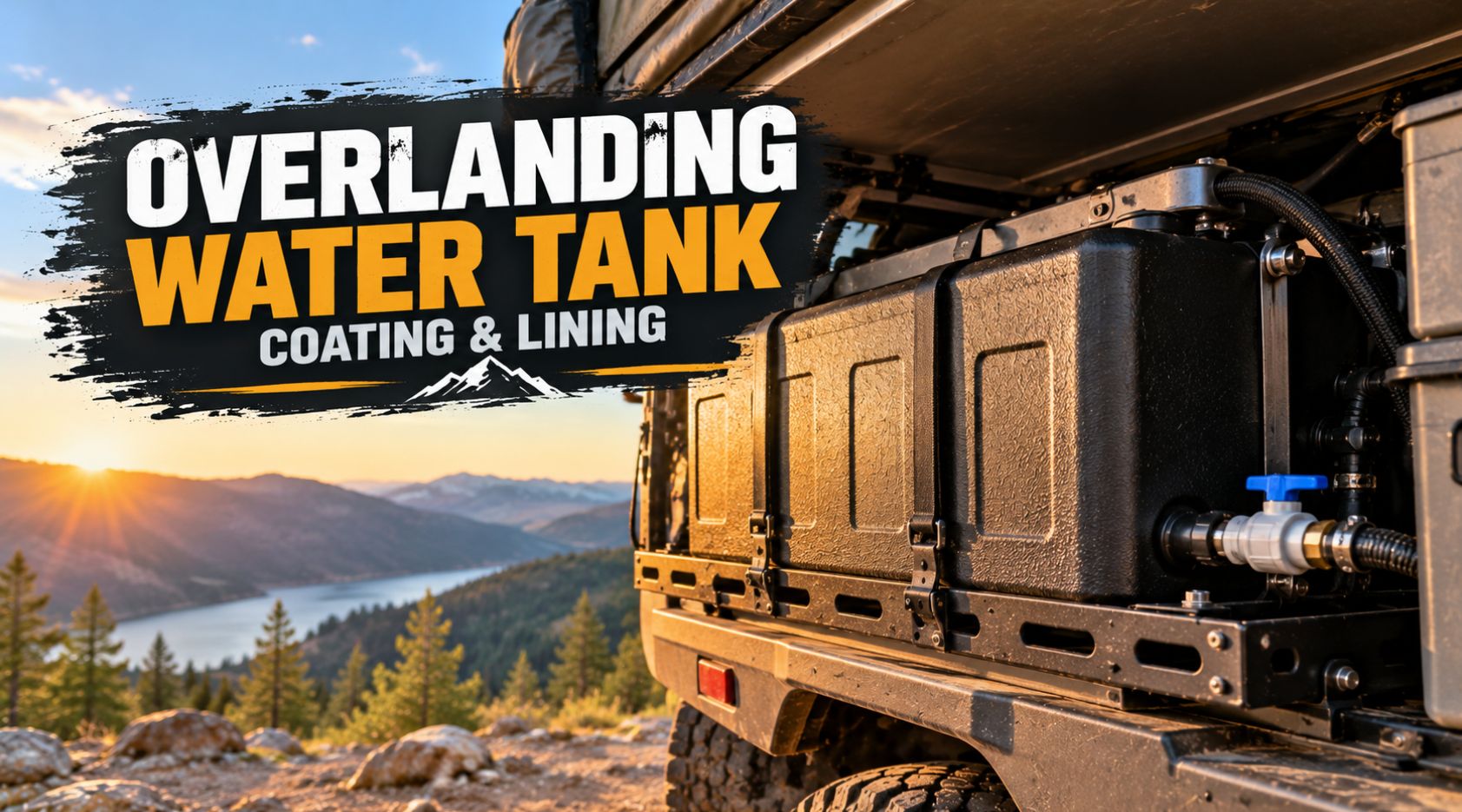
Water is the one resource an overland trip genuinely can’t continue without, more critical in the long run than fuel, recovery gear, or any other system on the rig, and the tank holding it is one of the least glamorous but most important components on the entire build. It doesn’t get the attention a winch bumper or a roof top tent does, right up until a trip where the water inside it tastes wrong, smells off, or the tank itself starts weeping at a seam a thousand kilometers from the nearest replacement part. Overlanding water tank coating is the unglamorous upgrade that actually determines whether that scenario happens to you or not.
This guide covers why factory and budget aftermarket water tanks fail under real overland use, what a proper lining or coating project involves, and what to actually verify before trusting a tank with your drinking water supply on a trip where the nearest reliable alternative might be days away.
Why Onboard Water Tanks Fail on Long Trips
Vibration is the first problem most people underestimate. An overland rig spends hours or days at a time on washboard roads, rutted tracks, and general off-pavement abuse, and a water tank mounted to absorb that constant vibration experiences fatigue stress that a stationary household tank never has to deal with. Seams, fittings, and mounting points are typically where this fatigue shows up first, sometimes as a slow weep that’s easy to miss until the tank is noticeably lighter than it should be partway through a trip.
Material degradation is the second issue, and it varies significantly by tank construction. Some plastic tanks can leach taste or odor into stored water over time, particularly under sustained heat exposure, a genuine concern for a tank mounted somewhere that bakes in direct sun for hours during a desert crossing. Metal tanks, less common but still used in some builds, face corrosion risk if the interior surface isn’t properly protected, especially once any protective coating or lining begins to break down from the same vibration and thermal cycling that stresses the tank structurally.
What Overlanding Water Tank Coating Actually Solves
A proper interior lining or coating addresses both problems at once when done correctly. A flexible, bonded lining can help manage the stress concentration at seams and fittings by providing a continuous barrier that doesn’t have the same discrete failure points a tank’s raw material and fabrication seams do on their own. For metal tanks specifically, a proper interior coating prevents direct water contact with bare metal, addressing corrosion risk directly rather than hoping the tank’s base material holds up indefinitely on its own.
For tanks already showing early signs of wear, a seep at a seam, a slightly off taste developing over a tank’s service life, relining can extend the tank’s usable life significantly compared to the cost and hassle of sourcing and fitting a full replacement tank, which on some builds means custom fabrication work rather than simply ordering a stock part.
The Certification Question: This Is Drinking Water
This deserves its own section because it matters more here than in almost any other overlanding coating decision. Any lining or coating product used inside a tank that will hold drinking water needs a verified NSF/ANSI 61 certification under its exact product name, confirmed directly with the manufacturer in writing, not assumed from general marketing language describing a product as food-safe or non-toxic. This is not an area where “it’s probably fine” is an acceptable standard, since the entire point of the tank is supplying water your body depends on, often far from any alternative source if something goes wrong.
Certification applies to the specific tested product, not to a general category of coating chemistry, so confirming that the exact product being used for your tank carries that certification, rather than assuming a similar-sounding product does, is a step worth taking seriously before committing to any lining project for a potable water tank.
What the Lining Process Actually Involves
A proper tank lining project starts with the tank completely empty and dried, since any residual moisture can interfere with proper adhesion. The interior surface gets cleaned and, depending on the tank material, appropriately prepped, removing any existing contamination, residue, or in the case of a metal tank, addressing any existing corrosion before new lining goes on top of it.
The lining material is then applied to achieve full, even interior coverage, including tight corners, fittings, and any internal baffles or structural elements some tanks include to reduce water movement during transit. These detail areas matter disproportionately, since an incompletely coated corner or fitting area is exactly where the problems a lining is meant to prevent, seepage, taste contamination, corrosion, tend to start first rather than on the flat, easy-to-reach tank walls.
Cure time has to be respected fully before the tank goes back into service, following the specific lining product’s documented timeline rather than rushing the tank back onto the vehicle to meet a trip deadline. A tank put back into service before the lining has properly cured risks both compromised lining performance and water contamination from an incompletely cured chemical surface.
Material Considerations: Plastic, Metal, and Custom Builds
Factory polyethylene tanks, common on many stock and aftermarket setups, generally don’t need interior lining in the same way metal tanks do, since the base material itself doesn’t corrode, though a tank already showing signs of seam failure or degradation can still benefit from a properly certified repair or lining approach. Metal tanks, whether stainless steel or aluminum, benefit most directly from interior coating, since an unprotected or inadequately protected metal interior is exactly where corrosion risk concentrates over a tank’s service life.
Custom-fabricated tanks, common on heavily built overland rigs with unusual space constraints that stock tanks don’t fit, often get coated or lined as a standard part of the fabrication process rather than as an afterthought, since a custom metal tank built specifically for a tight mounting location needs that interior protection from day one rather than being retrofitted later.
Overlanding Water Tank Options Compared
| Tank Type | Corrosion Risk | Lining Need | Common Failure Point |
|---|---|---|---|
| Factory polyethylene | None (material doesn’t corrode) | Generally not needed unless repairing damage | Seams, fittings, vibration-related cracking |
| Stainless steel | Low but present | Beneficial for long-term protection | Weld seams, fitting penetrations |
| Aluminum | Moderate | Strongly recommended | Corrosion at unprotected interior surfaces |
| Custom-fabricated metal | Depends on material | Standard practice during fabrication | Fitting and mounting point stress |
Things to Consider Before Lining a Water Tank
- Has the exact lining product’s NSF/ANSI 61 certification been verified in writing, specifically for potable water contact, before committing to it?
- What’s actually causing the tank’s current issue, a seam failure, corrosion, taste contamination, and does lining address that root cause or just mask a symptom?
- Has the tank been fully drained and dried before any coating or repair work begins?
- Are detail areas, fittings, corners, internal baffles, getting the same thorough coverage as the main tank walls?
- Is there enough time built into the trip schedule to respect the lining’s full cure time before the tank goes back into service?
Maintenance for a Lined Water Tank
Periodic inspection matters even after a proper lining job, particularly checking for any change in water taste or clarity that might indicate a developing problem, and a visual check of accessible fittings and seams when the tank is drained for cleaning or winter storage. Draining and cleaning the tank periodically, following whatever schedule makes sense for how often the rig is used and how long water typically sits in the tank between trips, helps catch a small issue while it’s still a simple fix rather than a trip-ending failure far from help.
Frequently Asked Questions
Does every onboard water tank need an interior lining?
Not necessarily. Factory polyethylene tanks in good condition generally don’t need lining, since the base material doesn’t corrode, but metal tanks and any tank already showing wear or failure signs benefit significantly from proper lining.
Is it safe to use any waterproof coating inside a drinking water tank?
No. Only products with verified NSF/ANSI 61 certification for the exact product name should be used for drinking water contact, confirmed directly with the manufacturer rather than assumed from general safety claims.
Can a leaking tank be relined instead of replaced?
Often yes, provided the underlying tank structure is still sound and the leak is addressed as part of the lining process rather than simply coated over, which would mask rather than fix the actual problem.
How long does a tank need to cure before it’s safe to use again?
This depends entirely on the specific lining product’s documented cure time, and rushing a tank back into service before that time has fully elapsed risks both lining performance and water safety.
Do custom-fabricated metal tanks always need interior coating?
It’s standard practice for most custom metal tank builds, since unprotected metal interior surfaces are a direct corrosion risk, and coating during fabrication is generally easier and more thorough than retrofitting it later.
Conclusion
Overlanding water tank coating doesn’t get the attention more visible build upgrades do, but it protects something no amount of recovery gear or trail preparation can substitute for once you’re genuinely out of safe drinking water. Verifying certification properly, addressing the actual root cause of any existing tank problem rather than coating over it, and respecting cure time fully before the tank goes back into service are what separate a lining project that genuinely solves the problem from one that just delays it until the next long trip.