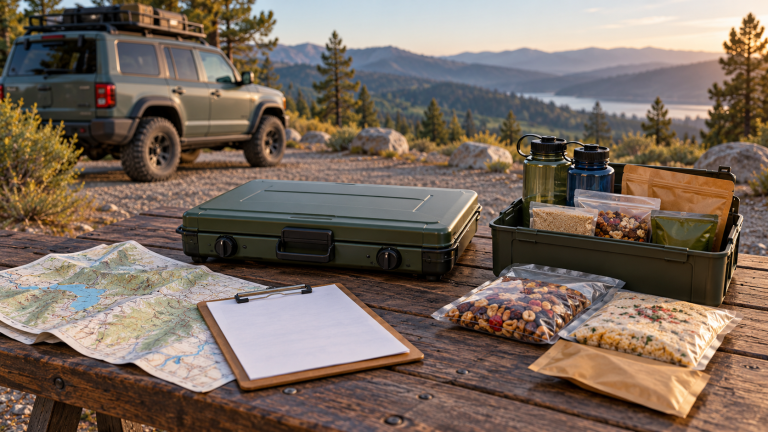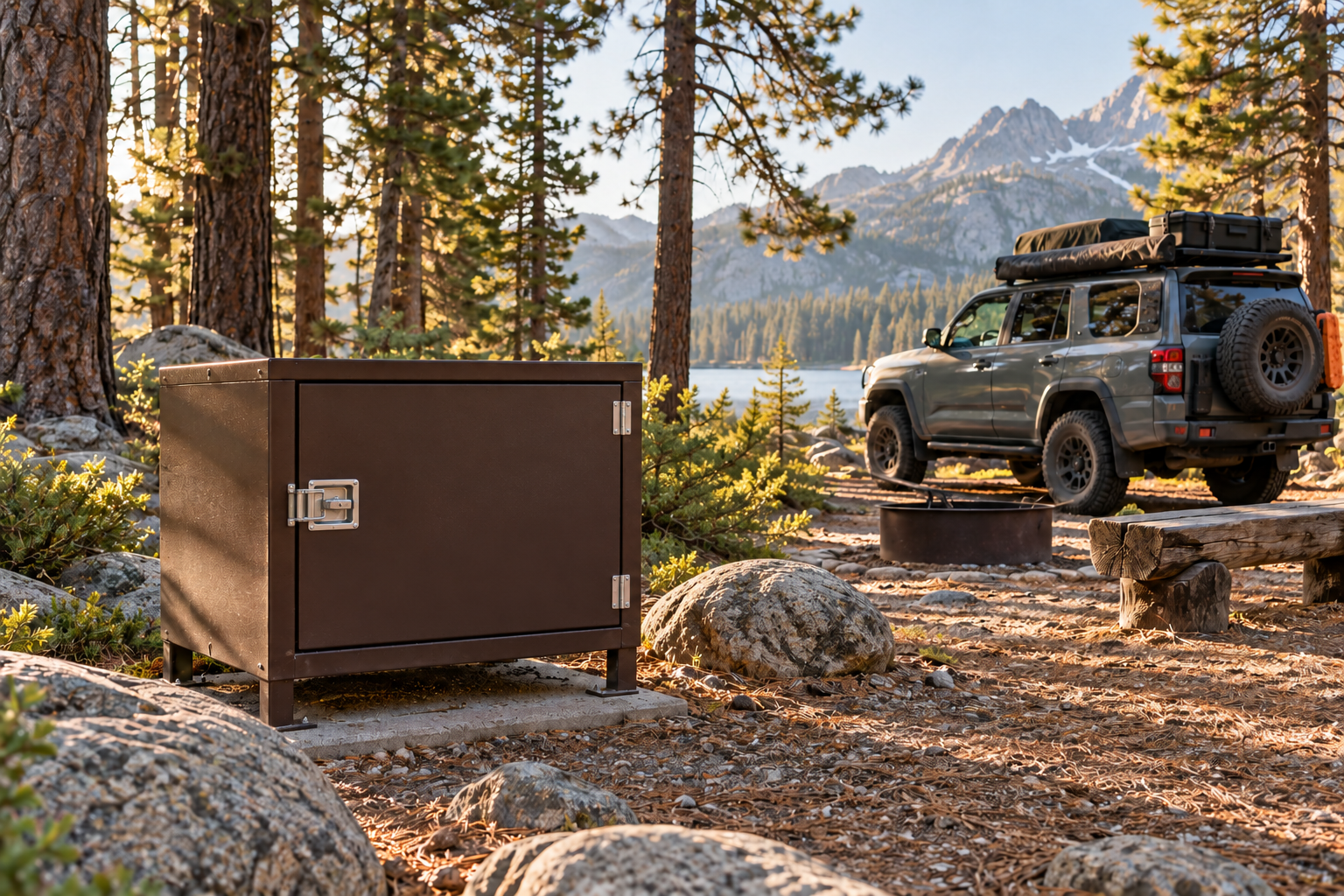
A bear-country food-storage plan starts with the places you will stop, not with the cooler you already own. An overnight campsite, a trailhead parking area and a lunch stop may have different requirements. Before packing the vehicle, identify the rule that applies at each location and decide how you will comply without unloading half the rig.
This is a planning guide, not a test of bear-resistant products. A rugged box, locking drawer or truck canopy should not be treated as proof that a particular land manager permits food inside it.
Build a stop-by-stop storage note
For each planned overnight location, save the official food-storage guidance alongside the reservation or route note. Include the name of the campground or management area, the page you checked and the date. Read any current alerts before departure. If the official wording does not address your vehicle setup, ask the managing office rather than borrowing a rule from another park.
The National Park Service’s general food-storage guidance explains that requirements vary: some places require lockers or bear-resistant containers, while others permit different methods. Treat that guidance as a starting point for finding the specific local instructions.
A useful trip note has four fields: where the food will go, which scented items must join it, when storage must be completed and what backup stop you can use if the planned arrangement is unavailable. Keep a copy offline with the rest of your route information.
Do not assume the truck is the overnight solution
Yosemite illustrates why the details matter. Its food-storage rules prohibit leaving food in a pickup bed or strapped outside a vehicle. Food in cars and trucks is allowed only during daylight under specified conditions; after dark, a food locker is required. The park separately describes conditions for hard-sided RVs and excludes soft-sided campers from that allowance. Those distinctions should not be generalized to every destination.
The same Yosemite page counts more than meals as food-related storage: toiletries, trash, unwashed cooking items and even empty ice chests are included. A shopping list alone therefore does not describe the amount of space your storage plan needs.
Pack for the transfer, not only the drive
At home, make a dry run with everything that will need to move together. Use manageable groups so the evening transfer is straightforward: meal ingredients, snacks, wash items and waste. Keep these groups identifiable without scattering small items through door pockets, recovery bags and sleeping gear.
Write a short inventory for your own setup. For example, a breakfast bag kept in the cab and a toiletry kit in a roof tent can be easy to overlook when the main cooler has already been moved. The point of the list is to catch those separate storage habits before they become an arrival problem.
Check the dimensions and availability of the permitted storage arrangement where that information is provided. Do not solve a poor fit by leaving the overflow elsewhere. Change your packing, resupply plan or destination before the trip if you cannot meet the local requirement.
Give every stop a closing routine
Divide the task between travelers clearly: one person checks food and kitchen items; another checks the cab, sleeping area and loose bags. A solo traveler can use the same list in two passes. Include the morning departure check so nothing is left behind in a shared locker.
Keep wildlife storage separate from temperature control. Moving a cooler to the required location does not establish that its contents stayed cold enough. Continue the cooler temperature plan appropriate to the food you carry.
Questions to settle before departure
- Which official rule covers each campsite and trailhead?
- Does it distinguish daytime parking from overnight storage?
- Does it explicitly address your type of vehicle or camper?
- Will every required item fit in the permitted storage?
- What will you do if the intended stop or locker is unavailable?
A workable plan is specific enough that you can follow it after a long driving day. The best storage purchase is the one that fits that verified plan, rather than one chosen on a broad claim of toughness.