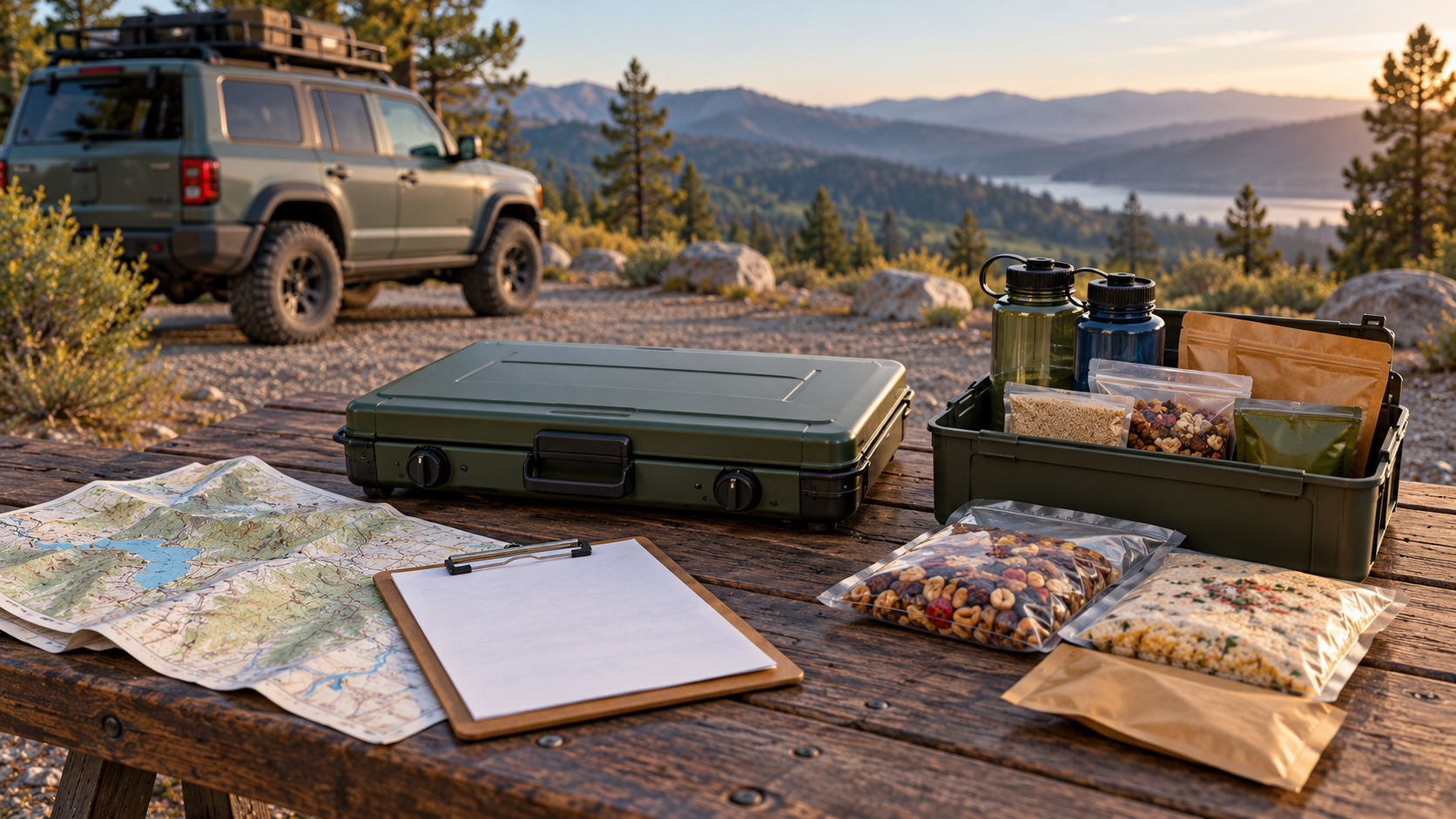
Check whether you can use your camp stove before building the trip menu. An overlanding route can cross several land-management boundaries, and the cooking setup allowed at one overnight stop may be restricted at the next. Save the applicable instructions for each stop, identify the appliance you actually carry, and pack food you can eat without lighting anything.
The checks below apply to U.S. public-land trip planning. Current land-manager orders, posted restrictions and appliance instructions take priority. This guide does not determine whether any particular campsite is open or any particular stove is permitted today.
Find the rules for the exact overnight stop
Start with the managing agency and the specific forest, district, park or recreation area. Then find its current alerts, fire restrictions and closure information. A regional news story or an app’s campsite description may help you locate the responsible office, but read that office’s current information before deciding what to pack.
The BLM’s Oregon/Washington restrictions page illustrates the layers worth checking: it lists an annual prevention order alongside district-specific restrictions and closures. It also explains that other agencies can have separate restrictions for the land they manage and that conditions can change quickly.
Check planned lunch stops and backup camps as well as the main destination. Record the location and planned date next to each saved order. If you change the itinerary, repeat the check for the new stop instead of carrying yesterday’s permission into a different jurisdiction.
Read the order and its exceptions together
A headline such as “Stage 1 restrictions” is a prompt to open the details. Find the effective dates, boundary map, prohibited activities, exceptions and any attached list of designated recreation sites. Check whether a newer notice replaces or lifts the order.
For example, BLM Colorado’s explanation of restriction levels distinguishes developed-campground fire structures from dispersed sites and describes exceptions for certain pressurized-fuel devices. The same page separates seasonal restrictions from year-round rules. Those details belong to that agency’s guidance; use the actual instructions for your destination rather than treating a stage number as a nationwide stove rule.
Save the complete order and relevant attachments, not just a cropped screenshot of the first paragraph. If a stove exception is limited to listed sites, confirm your exact site appears. An existing rock ring, a campsite reservation or another camper’s lit burner does not establish an exception for your equipment.
Match the appliance, fuel and controls
Write down the stove’s model and fuel before reading the exceptions. “Portable” and “propane” leave important questions unanswered. Check whether the wording covers cooking stoves, lanterns or decorative campfires; which fuels it names; and whether it requires a shut-off valve, a particular certification, or separation from combustible material.
The distinction can be quite specific. In its 2026 Central Oregon river announcement, the BLM prohibited portable propane campfires while allowing specified commercially manufactured metal cooking stoves using bottled propane or liquid fuel. That dated example shows why a fuel name alone cannot answer the question. It is not permission to use a stove at a future destination.
Do not assume an alcohol burner, wood stove, charcoal grill or pellet device qualifies for an exception written for a different fuel or appliance. Keep the manufacturer’s instructions available so you can identify the equipment accurately. If the order is unclear, ask the managing office about the exact device, location and travel date before relying on it.
Check permits separately
Some trips require a fire-related permit even when the only planned flame is a stove. CAL FIRE’s campfire-permit guidance includes portable stoves and makes clear that local restrictions still apply. Check the permit requirements for the land you will visit and carry the required documentation.
Record two separate answers in your trip notes: whether you have the required permit, and whether the current order allows your planned use. Completing a permit process does not resolve every restriction. If you cannot establish both answers, plan around food that needs no cooking.
Keep dinner workable without a flame
Pack a complete no-cook meal option for the group, with enough drinking water and food that meets its labeled storage requirements. Ready-to-eat shelf-stable items can reduce dependence on a burner. A meal that requires boiling water or reheating still depends on an allowed cooking method.
Legal permission also leaves a separate safety decision. Follow the appliance’s operating limits and all required clearances. If weather or the available space prevents safe use, leave it off. Do not move an outdoor stove into a tent or vehicle to escape wind or rain. The Consumer Product Safety Commission warns about carbon monoxide from portable fuel-burning equipment in enclosed spaces; charcoal must never be burned inside a tent or vehicle.
Before leaving service, finish a short cooking note for each overnight option:
- Exact location, managing office and date checked.
- Applicable order, dates, map and attachments saved.
- Stove model and fuel checked against the full exception.
- Permit and operating conditions confirmed.
- No-cook food ready if permission or conditions change.
Recheck official updates when you have service and follow current signs at arrival. Our campsite arrival checklist covers the separate decision about whether the whole camp fits and conditions are suitable. Having dinner ready without a flame makes it easier to accept a changed restriction and keep the trip moving.
Researched trip-planning guidance. Cover: AI-generated conceptual illustration, not a verified campsite or meal plan.