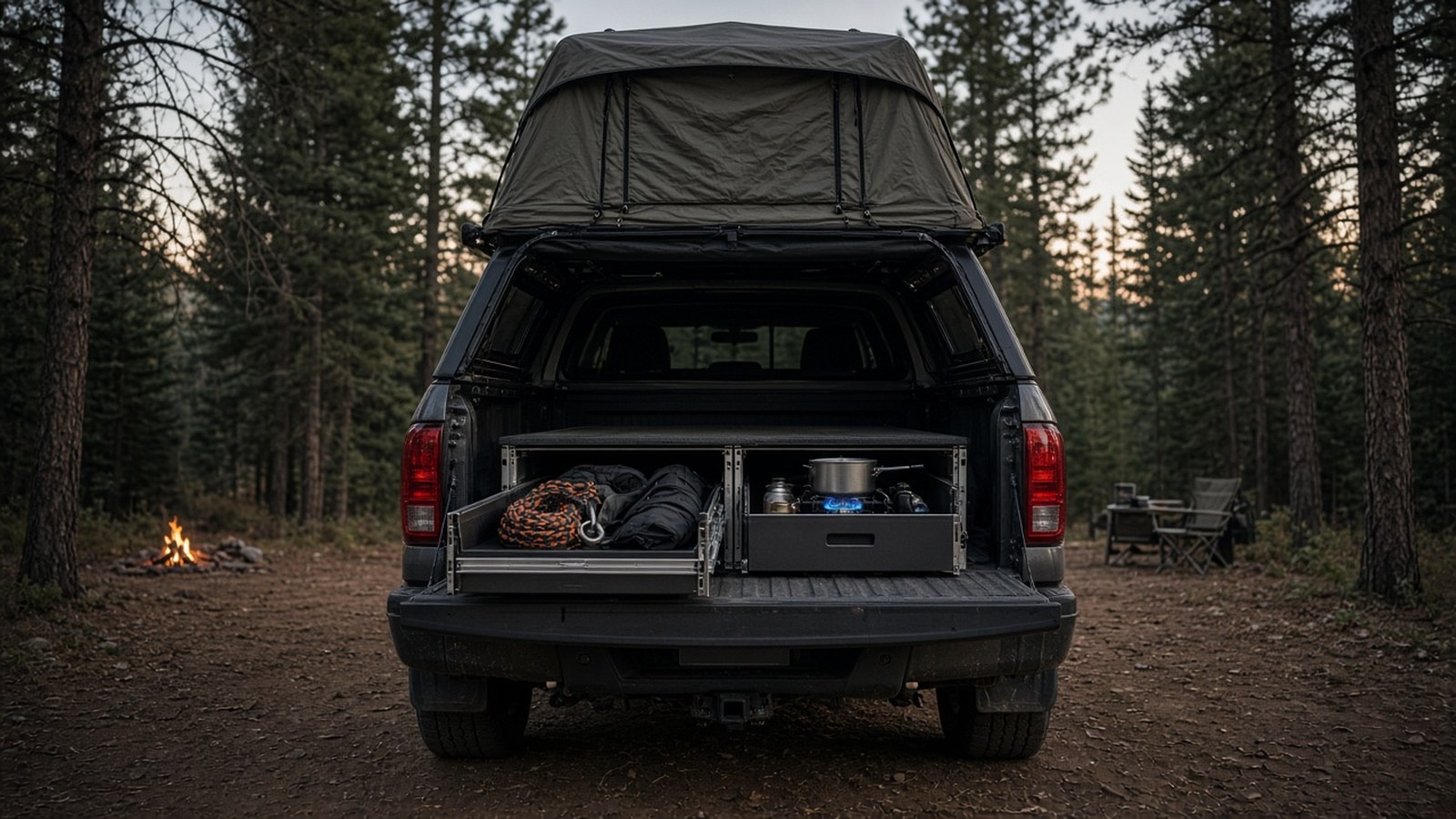
Every overland truck reaches the same point. The bed is a pile of totes, the recovery gear is under the cooler, and finding the stove means unloading half the truck in the rain. A truck bed drawer system fixes that by turning the bottom foot of the bed into organized, lockable storage with a flat deck on top. It’s one of the best upgrades you can make, but it’s also heavy, it eats bed height and it has to work with your liner, cover and payload. This guide covers the main types, what to check before you buy, a payload calculator and how to install one so it doesn’t rattle, leak or rust the bed.
Why a truck bed drawer system
A good drawer system gives you:
- Organization. Recovery gear, tools and kitchen each get a home.
- Security. Lockable drawers keep gear out of sight. That matters at trailheads and in towns.
- A flat deck. The top is still usable for a cooler, a fridge slide, bikes or a sleeping platform.
- Weather protection. Good systems keep most water and dust out.
The trade-off is weight, cost and about a foot of bed height.
Types of drawer systems
| Type | What it is | Good for | Watch out for |
|---|---|---|---|
| Commercial modular | Molded or metal drawers in a frame, sold by bed size | Most overland builds; quick install | Weight; fixed drawer layout |
| Custom welded or aluminum | Built to order for your bed | Heavy loads, exact layout | Cost and lead time |
| DIY plywood | Built from plywood and drawer slides | Budget builds, custom layouts | Water, weight and rattles unless built well |
| Bed slide (single tray) | One full-width sliding tray, sometimes with drawers below | Fridge or heavy gear access | Less organization; slide ratings vary |
To put real numbers on the commercial option, here are published specs for one of the best-known systems, from DECKED’s technical specifications:
- 2,000 lb payload on the deck, evenly distributed.
- 200 lb per drawer.
- HDPE drawers and deck on a galvanized steel frame.
- Full-size short bed: about 65 inches long, 71.6 inches wide and 12.2 inches tall, and roughly 208 lb.
- 8-foot bed version: about 75 inches long and 233 lb.
- Short-bed drawer size: 61.4 inches long and 18.4 inches wide.
Those numbers are a useful benchmark when you compare any system: how much does it weigh, what can each drawer hold, and how much height does it take?
What to check before you buy
Bed length and generation. Drawer systems are sold by truck, bed length and model year. Bed dimensions change between generations.
Height. At around a foot tall, a drawer system cuts the usable height under a tonneau cover or shell. Measure what you’ll lose before you buy a tall cooler or fridge.
Cover and shell compatibility. Check that your tonneau or camper shell rails clear the deck and that drains still work.
Tie-downs. You’ll need tie-down points above the deck. Some systems include them, some use the bed’s factory points.
Water. No bed drawer is fully waterproof. Look for gaskets, raised drawer lips and a deck that sheds water to the sides.
Drawer layout. Two long drawers are standard. Think about what goes where. Recovery gear is heavy and you want it near the tailgate.
Payload calculator for your build
Payload is the number overland builds blow through first. Your truck’s payload is on the tire and loading information sticker in the driver’s door jamb. Everything counts against it: people, the drawer system, the gear inside, the roof rack and anything on it.
Overland payload check
The 10% margin is our rule of thumb, not a manufacturer number. Water is about 8.3 pounds a gallon, and a trip’s worth of water and food can eat a margin quickly.
Building your own vs buying
A plywood drawer system is a classic weekend build, and it can be a good one. It can also be heavier than a commercial unit and less durable if you cut corners. If you build your own:
- Use exterior-grade plywood and seal every edge. Raw plywood in a truck bed swells the first time it gets wet.
- Buy rated drawer slides. Heavy-duty locking slides cost more, but cheap ones bind under load and on washboard roads.
- Add drawer locks. A drawer that opens on a hill will dump its contents, or slam into you.
- Weigh it. Put the finished unit on a scale before it goes in the truck. Most DIY builders are surprised by the number.
- Leave drainage. Raise the base off the bed floor slightly so water can reach the drains.
Buying makes more sense if you want a warranty, a known load rating and a quick install. Building makes sense when you need a layout nobody sells.
Protect the bed before the drawers go in
Once a drawer system is installed, you won’t see the bed floor again for years. Anything trapped under it, such as sand, water, road salt or scratches through the paint, will sit there and work on the steel. That’s the best argument for lining the bed before the drawers go in.
Spray-in liner. Bonds to the bed, so there’s no gap for water or grit to sit in. It also grips the drawer system’s feet and cuts rattles. Our post on spray-in bedliner for overland trucks covers what to ask a shop, and this breakdown of F-150 spray-in bed liner cost gives a sense of pricing on a full-size truck.
Drop-in liner. Cheaper, but water and grit can collect underneath. Under a drawer system, that’s a bad combination.
Roll-on liner. A middle-ground DIY option. This guide to roll-on bed liner covers prep and how many coats to plan for.
More on why coatings matter for overland trucks in the benefits of overlanding bedliner coatings.
Installing a drawer system
Every system has its own instructions, and you should follow them. These steps apply to most:
- Empty and clean the bed. Vacuum out grit and check the drains.
- Protect the floor. Line the bed if it isn’t already, and fix any chips through the paint.
- Set the frame or base. Most systems sit on the bed floor and clamp to the bed rails or tie-down points. Few need drilling.
- Square it up. Center it side to side and push it to the bulkhead. Make sure the tailgate closes without contact.
- Tighten and check. Torque clamps or bolts as specified. Load the drawers and test every slide.
- Recheck after the first trip. Washboard roads loosen hardware. Recheck clamps after the first rough trip, then on your regular service schedule.
Packing the drawers
Weight goes low and forward. Heavy, dense items such as recovery gear, tools and spare parts belong in the drawers. Light, bulky things go on the deck or up top.
A layout that works for a lot of builds:
- Driver-side drawer: recovery kit, air compressor, tire repair, tools.
- Passenger-side drawer: kitchen box, stove, fuel, dishes.
- Deck: fridge on a slide, water, camp chairs.
If you camp in bear country, the drawers aren’t a bear-proof locker. Follow the food storage rules where you camp, and read our bear-country food storage plan.
Building something different, like an EV or a compact truck? Accessory makers are already lining up bed systems for new models, as this look at Rivian R2 accessories shows. And if a drawer system won’t fit your plans, an overland trailer moves the storage off the truck entirely.
Truck bed drawer system checklist
☐ Bed length and model year confirmed
The system matches your exact bed.
☐ Height loss measured
Cover, shell and fridge still fit.
☐ Payload calculated
People, drawers, gear, rack and water all counted.
☐ Bed lined
Spray-in or roll-on liner before install.
☐ Drains clear
Water can still leave the bed.
☐ Clamps torqued
Rechecked after the first rough trip.
☐ Drawer weight under rating
No drawer over its limit.
Truck bed drawer system FAQ
How much does a truck bed drawer system weigh?
It depends on the build. DECKED lists about 208 lb for its full-size short-bed system and 233 lb for the 8-foot version. Lighter aluminum and DIY systems exist, but check their load ratings.
How much weight can bed drawers hold?
Check your system’s rating. DECKED rates each drawer at 200 lb and the deck at 2,000 lb evenly distributed. Your truck’s payload is usually the real limit.
Do bed drawers work with a tonneau cover?
Usually, yes. Just remember you’re giving up roughly a foot. Make sure the cover rails clear and your fridge still fits on top.
Should I line the bed before installing drawers?
Do it. After the drawers go in, that floor is out of sight for years. Spray-in bonds right to the steel, so there’s nowhere for water and sand to hide.
Are truck bed drawers waterproof?
Resistant, not proof. Gaskets and sloped decks help a lot. Still, anything that can’t get wet goes in a dry bag.