A portable toilet is only half a waste plan. Before an overlanding trip, decide which system the destination permits, where it will ride, how the group will use it and where the collected waste will actually be accepted. A packed toilet that cannot be reached—or a full one with no disposal destination—is an unfinished part of the route.
This is researched planning guidance for U.S. public-land travel, not a hands-on toilet review. Requirements differ by location and can change. Use the current instructions from the managing agency and the manufacturer of your system rather than treating any product category as universally approved.
Begin with the destination, not the shopping cart
List the main campsite, backup overnight stop and any permitted river or backcountry segment. For each, check the official sanitation requirements. Write down whether toilets are provided, whether packing out human waste is mandatory and whether the agency specifies a particular type of container or system.
BLM Utah’s human-waste guidance explains why terrain matters: pack-out systems are particularly relevant where suitable soil is unavailable, including rocky, frozen and heavily used settings. It also directs visitors to check area-specific requirements. A trowel in the recovery drawer is not proof that burial is appropriate at your destination.
Ask the managing office about unclear wording before departure. Describe the actual equipment rather than saying “we have a camp toilet.” A folding seat with disposable bags, a cassette toilet and a reusable waste tank are different arrangements. Permission for one does not automatically include the others.
Match the system to the whole group
Once the requirements are clear, compare the permitted options against the people and length of the trip. Count all travelers, not only the owner of the vehicle carrying the toilet. Include the time between confirmed disposal opportunities rather than assuming every campground has a usable facility.
Use the product’s directions for capacity, liners, closure, transport and cleaning. Do not substitute ordinary shopping bags for a specified waste-containment system. If you are borrowing equipment, obtain its instructions and check that the necessary components are present before packing.
Make the plan practical for the group’s needs. Discuss privacy, mobility, nighttime access and who will handle supplies and disposal. Those conversations are easier at home than after arriving at a crowded trailhead. If the system cannot be used comfortably within the permitted campsite footprint, change the arrangement or choose a site with facilities.
Verify disposal before leaving home
Identify an accepting facility for the specific waste stream. A toilet symbol on a map does not tell you whether a site accepts cassette contents, reusable-tank waste or packaged toilet bags. Check opening hours, seasonal closures, access restrictions and any fee directly with the operator.
The BLM’s Rogue River portable-toilet guidance makes a useful distinction: emptying portable toilets into government toilets is prohibited, and its disposal instructions treat approved waste bags differently from reusable toilet contents. This is a location-specific example, not permission to use any dumpster elsewhere. Follow both the current destination rules and the receiving facility’s instructions.
Save a backup disposal stop. If the planned station is closed, keep the waste contained in the appropriate system and travel to a confirmed alternative. Do not convert an unavailable facility into permission to dump on the ground, into a storm drain or into an unapproved toilet.
Pack for access and transport
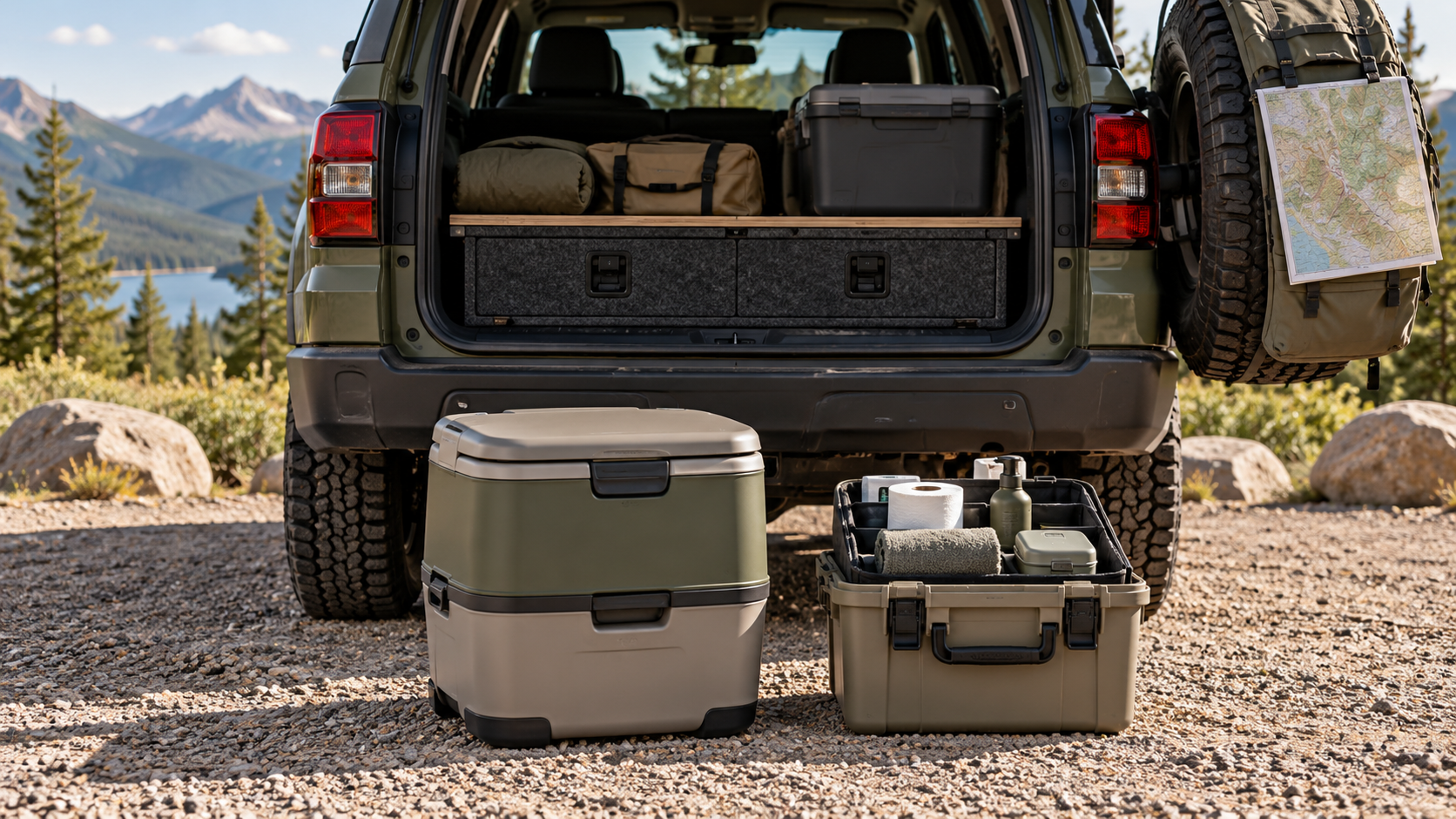
Choose the storage location before filling the vehicle with sleeping gear. Keep the toilet and clean supplies accessible without emptying the cargo area. Follow the manufacturer’s transport instructions and secure the system appropriately for the vehicle.
Keep clean supplies distinct from the used-waste container and food-handling equipment. Prepare a simple kit with the system’s required consumables and a suitable handwashing arrangement. Ask the manufacturer or land manager if the route imposes additional containment requirements; do not assume a soft bag alone meets a hard-sided-container rule.
Do a dry packing rehearsal with unused equipment. Can the person who needs it reach it? Can the group set it up without driving off the permitted route or enlarging a campsite? Can you transport the used system without improvising a new place for it halfway through the trip?
Put the sanitation plan beside the route plan
Our campsite arrival checklist addresses the broader decision to stay or move on. Add a sanitation line to that decision: the permitted system is available, the group can use it and the disposal plan still works.
A compact trip note should name the managing agency, the rule checked and date, the system carried, the available supplies, and both disposal destinations. Update it if the route changes. An unplanned extra night also deserves a capacity check.
The goal is not to buy the most elaborate toilet. It is to finish the complete chain from permitted use to lawful disposal. When that chain is clear before departure, waste handling becomes a manageable part of the trip rather than a problem passed to the next camper or land manager.