

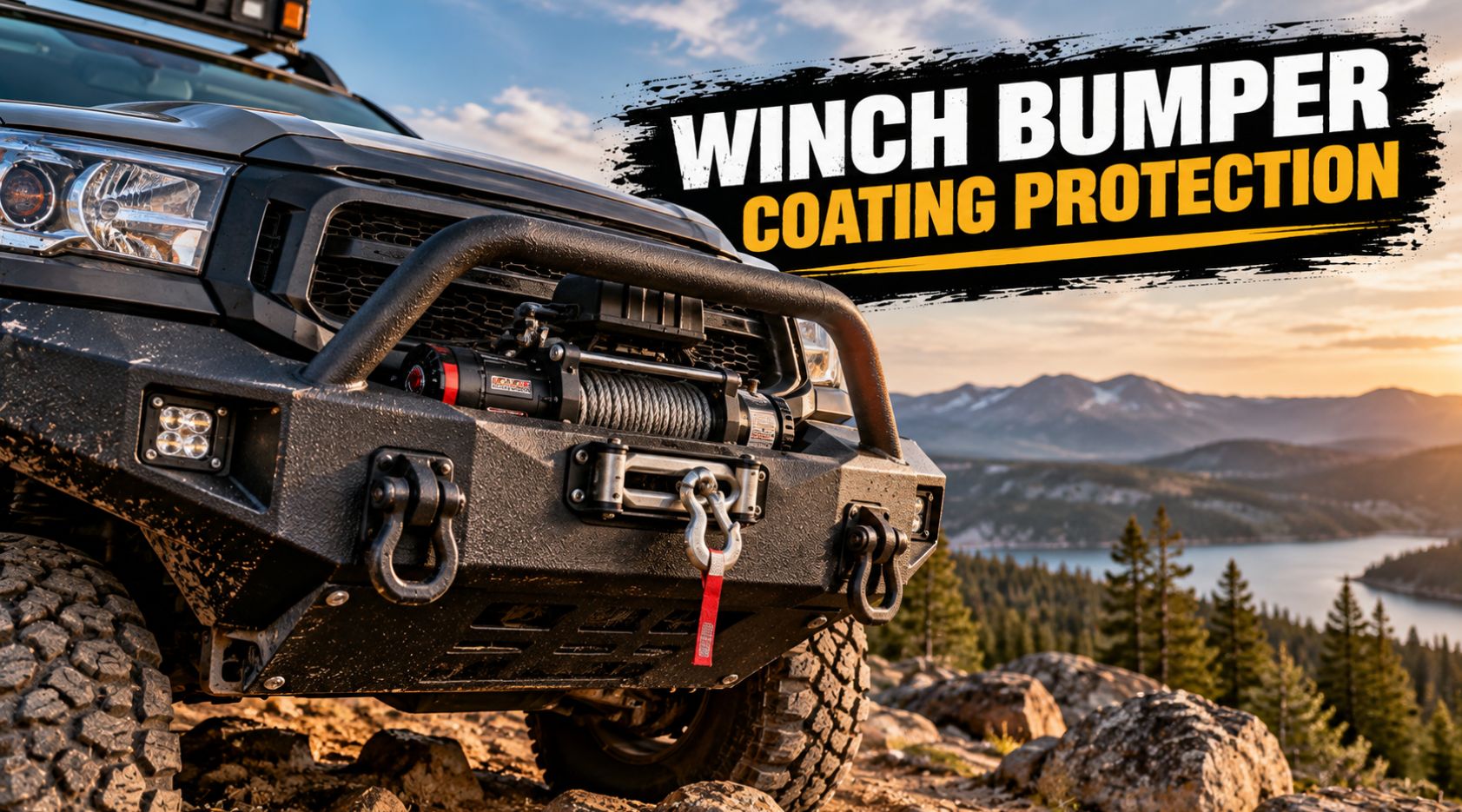
A winch bumper takes more direct abuse than almost any other panel on an overland build. It’s the first thing to contact a tree during a recovery, the mounting point absorbing load every time the winch is actually working, and the surface that collects rock chips, brush scratches, and cable wear session after session on the trail. Winch bumper coating protection isn’t a cosmetic upgrade on a component like this, it’s the difference between a bumper that still looks and functions like new after a season of real use and one that’s rusting at every chip and scratch within a year.
This guide covers why standard factory or aftermarket finishes let winch bumpers down specifically, what a proper protective coating needs to handle, and how to think about this upgrade for a bumper that’s actually going to work for a living.
Why Winch Bumpers Take More Abuse Than Other Panels
Most body panels on a vehicle are designed to look good and survive normal road use. A winch bumper has a fundamentally different job description. It’s a structural recovery point, meaning it has to handle real mechanical load during winching operations, cable wrap and wear at the fairlead, and direct impact from whatever obstacle a recovery situation actually involves, a stump, a rock, another vehicle’s bumper during a tow.
On top of that functional load, winch bumpers sit at the very front of the vehicle, taking the brunt of brush scratches, rock chips kicked up from the trail, and general debris impact that a body panel further back on the vehicle experiences far less of, simply by virtue of position alone. This combination of structural stress and constant surface abuse is exactly why winch bumper coating protection matters more here than on almost any other part of a build.
Where Standard Finishes Actually Fail
Factory paint on a stock bumper, or on a bumper that’s been swapped for an aftermarket winch-ready unit without additional protection, chips readily under rock impact and brush contact. Once chipped, bare metal is directly exposed, and a winch bumper’s front-line position means that exposure happens early and often compared to the rest of the vehicle.
Standard powder coating holds up better than paint but shares the same fundamental weakness covered in skid plate protection: it’s a relatively rigid finish that chips under sharp impact rather than flexing with it. A winch bumper absorbing a direct hit during a recovery, or repeated lower-intensity rock strikes over a trail season, develops the same chip-and-rust cycle that affects other rigid-coated undercarriage and exterior components, except it’s happening on a highly visible, structurally important part of the vehicle rather than a hidden underside component.
What a Winch Bumper Coating Actually Needs to Handle
A coating genuinely suited to winch bumper coating protection needs to manage several distinct stresses simultaneously, not just one. Impact resistance matters for the obvious reason, rock chips and brush contact happening constantly during trail use. Flexibility matters because a coating that can absorb and distribute impact energy resists the chip-and-expose cycle that rigid finishes fall into. Abrasion resistance matters specifically around the winch mounting area and fairlead, where cable contact and wear concentrate repeatedly in the same zones.
Corrosion resistance ties all of this together, since every one of those stress points, chips, abrasion wear, cable contact scuffing, becomes a potential rust initiation site if the underlying metal isn’t properly protected once the surface is compromised. A coating that only handles one or two of these stresses well, good abrasion resistance but poor flexibility, for example, ends up solving part of the problem while leaving the bumper exposed to whichever failure mode it wasn’t actually built to resist.
Spray-Applied Coatings for Winch Bumpers
This is another area where the same flexible, spray-applied polyurea and polyurethane coatings used on truck beds and skid plates translate directly to winch bumper protection. These coatings bond to the metal and cure into a textured, impact-absorbing film that handles the combination of structural stress and surface abuse a winch bumper experiences better than rigid paint or standard powder coating.
The texture these coatings typically cure with also offers a practical side benefit beyond pure durability, improved grip when handling cable, chain, or recovery gear around the bumper in wet or muddy conditions, which matters more than it might sound like during an actual recovery situation where secure handling of gear matters.
Coverage Details That Matter on a Winch Bumper
A winch bumper’s geometry includes more detail areas than a flat panel does, mounting plate surfaces, the fairlead opening, D-ring mounting tabs, and any brush guard or light mount tubing that’s part of the bumper assembly. Each of these areas deserves full coating coverage, not just the main visible bumper face, since mounting hardware and tight geometry areas are exactly where moisture and debris tend to collect and where corrosion often starts first if coverage is incomplete.
Coating around the winch mounting plate specifically needs enough thickness and durability to handle the mechanical stress of a winch bolted directly to it, without the coating interfering with proper hardware torque or mounting fitment, which is worth discussing directly with whoever is doing the coating work rather than assuming standard application automatically accounts for this.
Comparing Winch Bumper Finish Options
| Finish | Impact Behavior | Corrosion Resistance | Best Suited For |
|---|---|---|---|
| Factory paint | Chips easily | Poor once chipped | Light-duty, mostly on-road use |
| Standard powder coating | Chips under sharp impact | Good until damaged | Moderate trail use, lighter recovery work |
| Spray-applied polyurea/polyurethane | Flexes, absorbs impact | Strong, continuous barrier | Serious trail use, frequent recovery work |
Things to Consider Before Coating a Winch Bumper
- How often does the bumper actually see recovery use versus just general trail driving, and does that level of stress justify a more durable flexible coating?
- Is the current finish already showing chip damage or early corrosion at high-contact zones like the fairlead or mounting tabs?
- Will the coating cover the full bumper assembly, including mounting plates, D-ring tabs, and any integrated brush guard tubing, not just the main face?
- Does the coating thickness around the winch mounting plate account for proper hardware fitment and torque specifications?
- Is the applicator experienced with winch bumper and recovery equipment coating specifically, given the combination of structural and surface protection this component needs?
For broader context on how this same spray-applied coating approach gets used elsewhere on an overland build, our piece on overlanding trailer coatings covers the same general protective approach applied to a different, larger part of a rig.
Maintenance After Coating
Even a well-coated winch bumper benefits from inspection after any significant recovery operation or hard trail run, checking the fairlead area and mounting points specifically, since these see the most concentrated wear from cable contact and mechanical stress. Cleaning accumulated mud and debris from the bumper regularly also makes it easier to actually spot developing damage during routine checks, rather than missing a small chip or wear spot hidden under trail grime until it’s had time to develop into a larger corrosion problem.
Repairing Damage vs. a Full Recoat
A winch bumper that’s picked up isolated chip damage or minor scuffing after a trip usually doesn’t need a complete strip and recoat. Spot repair, cleaning the damaged area down to sound metal, reapplying coating locally, and allowing proper cure, can address isolated damage effectively and economically. A bumper showing widespread chipping, corrosion spreading beyond isolated points, or damage concentrated heavily around the mounting plate and fairlead area is a better candidate for a full recoat, since patching extensive damage piecemeal tends to leave inconsistent protection across the bumper and often costs more in the long run than addressing it comprehensively once.
Frequently Asked Questions
Does a coated winch bumper still need regular maintenance?
Yes. Coating significantly extends durability but doesn’t eliminate the need for periodic inspection, particularly around high-wear areas like the fairlead and winch mounting plate where cable contact and mechanical stress concentrate.
Can a winch bumper be coated after it’s already installed on the vehicle?
It’s generally easier and more thorough to coat a bumper off the vehicle, allowing full access to every surface and detail area, though on-vehicle coating is sometimes done for touch-up or repair work on specific damaged areas.
Does the coating affect how winch hardware mounts to the bumper?
It can slightly affect fitment tolerances depending on coating thickness, which is why discussing mounting plate coverage and thickness directly with the applicator before the work begins matters for a bumper that needs to accept winch hardware properly.
Is flexible coating really necessary, or does powder coating work fine for most builds?
For lighter trail use with infrequent recovery work, powder coating can hold up reasonably well. For serious, frequent trail use and recovery operations, flexible spray-applied coatings generally outlast powder coating’s chip-and-rust failure pattern by a meaningful margin.
How often should a winch bumper be recoated?
It depends heavily on how hard and how often the bumper actually gets used for real recovery work versus general driving, but periodic inspection with prompt touch-up repair extends the coating’s effective protection well beyond a single untouched application.
Conclusion
Winch bumper coating protection matters more on this component than on almost any other part of an overland build, given the combination of structural recovery load and constant front-line surface abuse it has to handle. Choosing a flexible, properly applied coating over factory paint or standard powder coat, and making sure coverage extends to every mounting point and detail area rather than just the main visible face, is what keeps a winch bumper doing its actual job, both protecting the vehicle and performing reliably during a real recovery, for the life of the build.